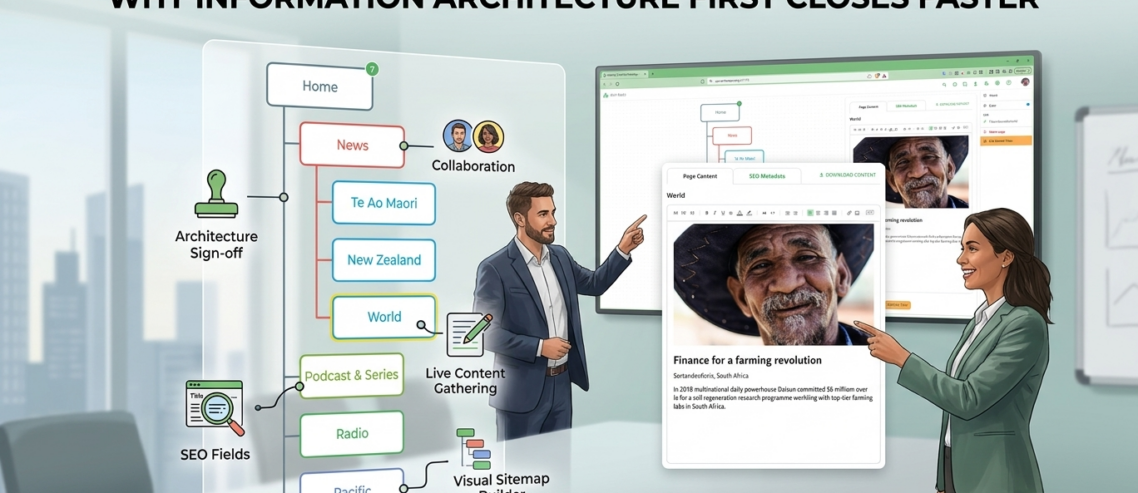

Why Showing Information Architecture First Closes Agency Deals Faster
In the competitive world of digital and creative agencies, securing new clients quickly and efficiently is paramount. Often, agencies lose valuable momentum during lengthy proposal stages, presenting intricate mockups prematurely, or failing to communicate strategic depth effectively. The key to accelerating client closure lies not in showcasing aesthetic designs early on, but in prioritizing and presenting a clear, logical website structure first. This article explores why showcasing information architecture for agencies early in the process fosters deeper client trust, streamlines operations, and ultimately helps agencies close bigger deals faster.
Trust Over Shiny Things: Why Clients Prefer Structure
Presenting detailed design mockups in the initial stages can sometimes lead to confusion or purely subjective feedback from clients. Structure, however, is logical and user-focused, making it less intimidating and easier to comprehend. When agencies present a well-thought-out information architecture for agencies early in the sales process, it implicitly reassures clients that you deeply understand their business objectives, content needs, and target audience’s user journey. This approach, which inherently incorporates UX prototyping for sales by demonstrating a considered user flow rather than just visual elements, builds foundational trust before aesthetic considerations ever come into play. Providing clients with professional-looking architectural blueprints, such as client-ready sitemaps generated by dedicated agency website planning software, offers tangible deliverables that help them visualize the proposed solution much better than abstract concepts, enhancing confidence and willingness to commit sooner.
Streamlining Decision Making: Real-time Alignment & Rapid Prototyping
Getting fast internal and client consensus is crucial for reducing sales cycle length and project delays. Manual methods for website planning for agencies are inherently slow, error-prone, and inefficient. By leveraging specialized website planning for pitches tools that include dynamic website planning software for agencies features, creative teams can rapidly build and iterate on site structures. A key advantage of using modern sitemap tools for agencies is the ability to facilitate real-time collaboration and guest editing. This allows agencies to invite clients directly into the visual sitemap builder for agencies, enabling immediate, precise feedback and significantly reducing the time spent on static documents, confusing email chains, and multiple rounds of purely structural revisions. Such rapid alignment on the core structure accelerates the overall decision-making loop, enabling agencies to transition swiftly from the proposal stage to project execution, thereby increasing agency website planning software efficiency throughout the client relationship.
Securing Early Commitments: The Power of Architecture Sign-off
The strategic value of a structure-first approach extends beyond initial buy-in; it allows agencies to obtain formal architecture sign-off before committing substantial resources to detailed design and development work. This crucial step is instrumental in setting clear expectations and boundaries for both the agency and the client, drastically mitigating the risk of costly and time-consuming scope creep during subsequent phases. By defining and locking in the information architecture for agencies, creative teams can then focus purely on design creativity and implementation without structural ambiguity. Furthermore, presenting a comprehensive, client-ready sitemap as a deliverable for clients demonstrates professionalism and thorough strategic planning from the outset, reinforcing confidence in the agency’s capabilities. Agencies can even integrate essential elements early on, such as SEO fields to plan keyword strategy or color coding to represent status, showcasing comprehensive website planning for agencies that developers can later easily translate into technical deliverables via XML/CSV exports, all of which contributes to a more efficient client onboarding for web design process and ensures scalable IA for agencies across projects.
The Modern Agency Advantage: Leveraging Technology for a Sales Edge
To differentiate themselves and win more business in a crowded market, forward-thinking digital agencies are moving away from traditional design-led sales pitches and adopting a structure-first approach. This shift requires utilizing the right tools for effective website planning for pitches. Specialized software for agencies not only streamlines internal workflows but also significantly enhances client-facing interactions. Consider, for example, the value of incorporating an AI sitemap generator during the initial discovery phase or using it to rapidly audit competitor structures during a proposal presentation – it demonstrates deep strategic insight, proactive initiative, and exceptional efficiency. By embracing this approach and equipping their teams with a powerful sitemap tool for web designers and agency professionals alike, creative businesses can foster significantly deeper client trust, reduce decision-making friction, prevent scope creep, and ultimately close bigger deals much faster.
Frequently Asked Questions about Architecture-First Agency Sales
Why is displaying website architecture early beneficial for agency sales?
Displaying website architecture first, rather than detailed visual mockups, builds earlier client trust by focusing purely on logical user flow, user experience, and overarching business objectives before delving into potentially subjective design discussions. This strategic move significantly reduces initial client confusion, prevents lengthy and redundant structural revision cycles, and often leads to much faster decision-making and project commitment, ultimately accelerating the sales cycle for digital and creative agencies.
How can a sitemap tool for agencies accelerate client closure?
A dedicated sitemap tool for agencies facilitates extremely rapid visual sitemap creation, enables seamless real-time collaboration for efficient and prompt client feedback loops, and generates professional-looking deliverables (such as polished PDFs for presentations and comprehensive CSV or XML exports for developers) that directly help clients visualize the underlying strategic plan and proposed solution. This greatly streamlined communication, reduced ambiguity, and immediate tangibility of the structure empowers agencies to secure crucial client buy-in significantly earlier in the sales process compared to traditional methods.
Can focusing on information architecture reduce scope creep later?
Yes, focusing on and obtaining formal information architecture sign-off from clients *before* commencing detailed design or any development work is one of the most effective strategies for reducing uncontrolled scope creep. By clearly defining and agreeing upon the entire structure up front, both the agency and the client establish precise boundaries and shared expectations. Any subsequent structural changes or additions requested by the client can then be much more easily identified as changes in scope and managed appropriately through formal change requests, protecting both project timeliness and profitability for the agency.
What features are essential in website planning for agencies tools?
Essential features for effective agency website planning software should include a highly intuitive visual drag and drop sitemap builder for rapid structure creation, integrated live content gathering capabilities to avoid delays, real-time collaboration and guest editing functionalities for streamlined stakeholder input, and versatile export options (including professional PDF exports for presentations and proposal attachments, as well as XML and CSV exports for efficient developer handover). Additional valuable features often incorporate dedicated SEO management fields for early optimization planning and color-coding/tagging capabilities to visually track project status and manage multiple complex structures, adding further value across agency website planning software and increasing efficiency throughout the entire client onboarding for web design process.
Conclusion: Drive Faster Growth through Structure-Led Selling
In conclusion, the powerful practice of showcasing information architecture first is not merely a tactical change for digital and creative agencies; it represents a profound strategic opportunity in today’s demanding market. By consistently prioritizing website structure over prematurely complex visuals, agencies are able to foster demonstrably deeper client trust, significantly reduce decision-making friction, pro-actively prevent scope creep, and ultimately accelerate the entire client onboarding for web design and closing sales cycle. Embracing efficient information architecture for agencies best practices, integrating UX prototyping for sales methodologies implicitly, and utilizing specialized website planning software for agencies enables creative teams to differentiate themselves effectively, showcase profound strategic depth, and position their businesses as invaluable strategic partners, not just service providers, thus paving the way for faster growth, larger deals, and sustained long-term client success for web design and development projects. Invest in a streamlined architectural planning process and equip your agency with the right specialized tools to make this structure-first philosophy a core driver of your sales strategy.

Comments
Leave a Comment