Posts about: "Website Planning"
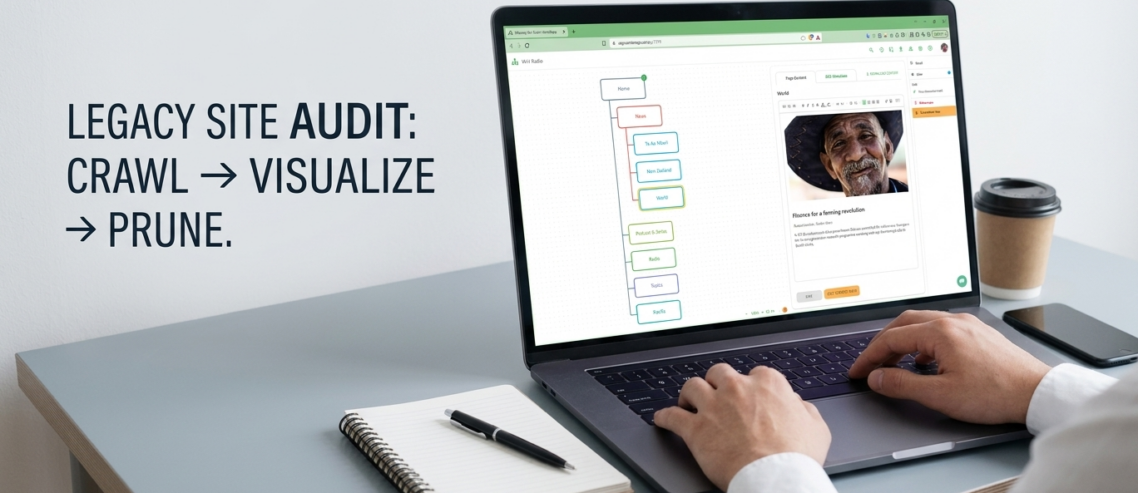

How to Audit a Legacy Website in Under an Hour: The Ultimate Agency Guide
For digital and creative agencies, the discovery phase of a redesign project is often the most labor intensive. Auditing a legacy website with hundreds of pages of “dead wood” can stall a project before it even begins. To maintain profitability and clear information architecture for agencies, you need a workflow that moves from data collection …
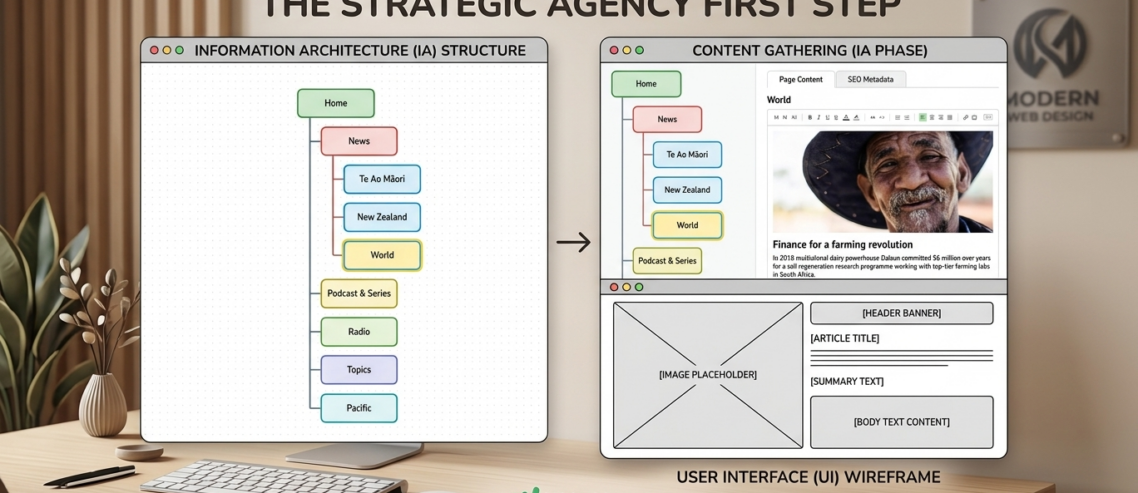
Visual Sitemaps vs. Wireframes: Why Agencies Should Prioritize Information Architecture
For digital and creative agencies, the transition from a client pitch to a successful launch relies on clarity. A common debate in website planning for agencies is whether to start with a visual sitemap or jump straight into wireframes. While wireframes help visualize the layout, starting with Information Architecture (IA) is the most effective way …
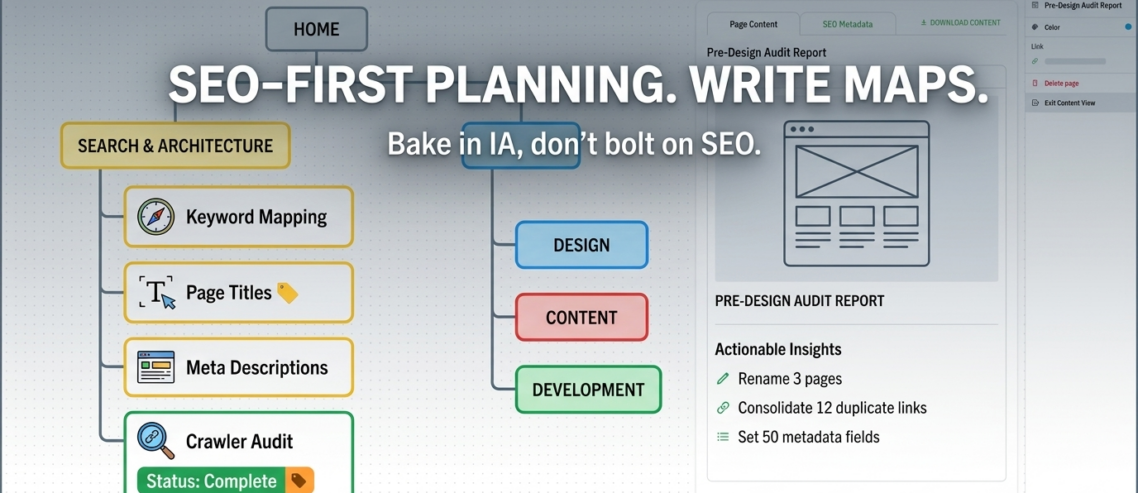
How Savvy Agencies Plan SEO Before Design (And Why It Works)
Modern web design agencies know a secret: bolted-on Search Engine Optimization (SEO) is inefficient, costly, and often ineffective. To truly deliver value, agencies are increasingly adopting an SEO-first approach, integrating search strategy directly into Information Architecture (IA) long before creative design begins. Discover how successful teams leverage specialized agency website planning software to bake SEO …
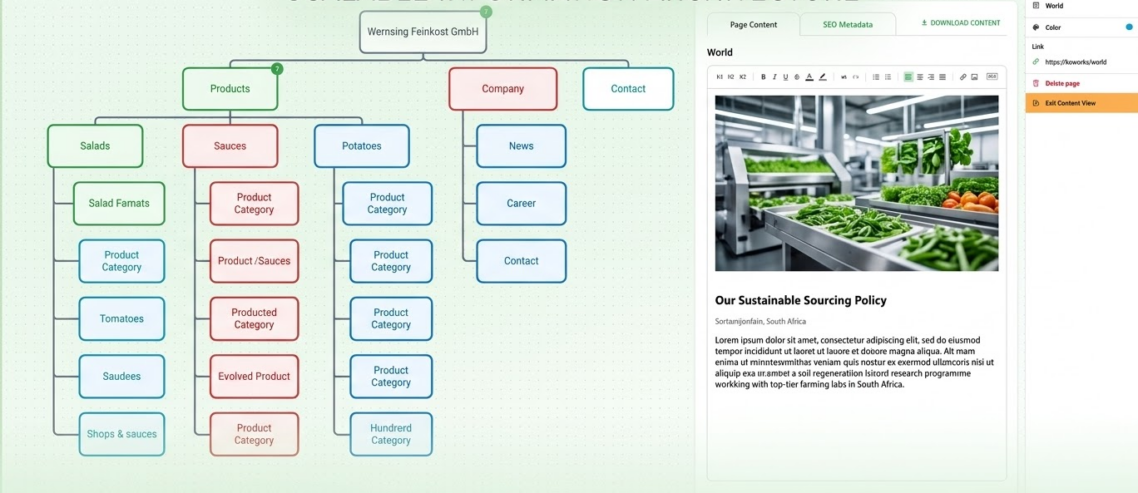
Scalable Information Architecture for Growing Agencies: From 5-Page Sites to 500-Page Enterprise Projects
As your digital agency scales, the projects you win grow in complexity. One month you’re crafting a sleek 5-page brochure site for a local boutique; the next, you’re deep in a 500-page enterprise architecture audit for a multinational corporation. The tools and processes that worked for small websites quickly become bottlenecks when you’re juggling dozens …
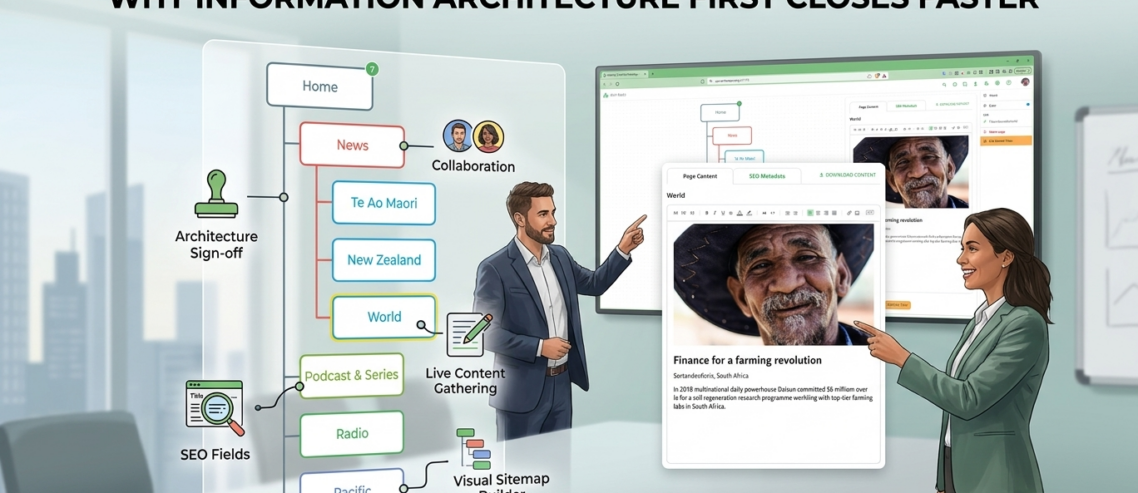
Why Showing Information Architecture First Closes Agency Deals Faster
In the competitive world of digital and creative agencies, securing new clients quickly and efficiently is paramount. Often, agencies lose valuable momentum during lengthy proposal stages, presenting intricate mockups prematurely, or failing to communicate strategic depth effectively. The key to accelerating client closure lies not in showcasing aesthetic designs early on, but in prioritizing and …
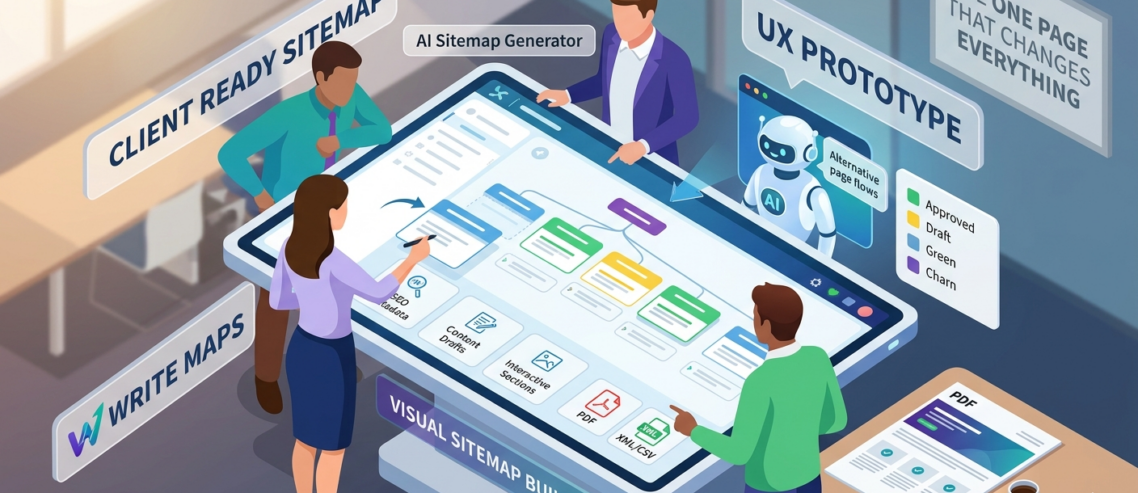
The Power of a Sitemap for Client Proposals: Transforming Your Sales Pitch
In the competitive landscape of digital and creative agencies, securing new projects often boils down to how effectively you can articulate a solution. A crucial yet overlooked tool that can drastically improve your win rate is the sitemap for client proposals. Conventionally viewed as a post-contract deliverable for information architecture, the visual sitemap, when used …

How to Win More Web Design Pitches with Visual Sitemaps
In the competitive world of digital and creative agencies, winning new business often comes down to one thing: clarity. When clients are presented with vague strategies and abstract promises, they naturally hesitate. The pitch that usually wins is the one that makes the proposed solution feel tangible, structured, and low risk. This is where website …
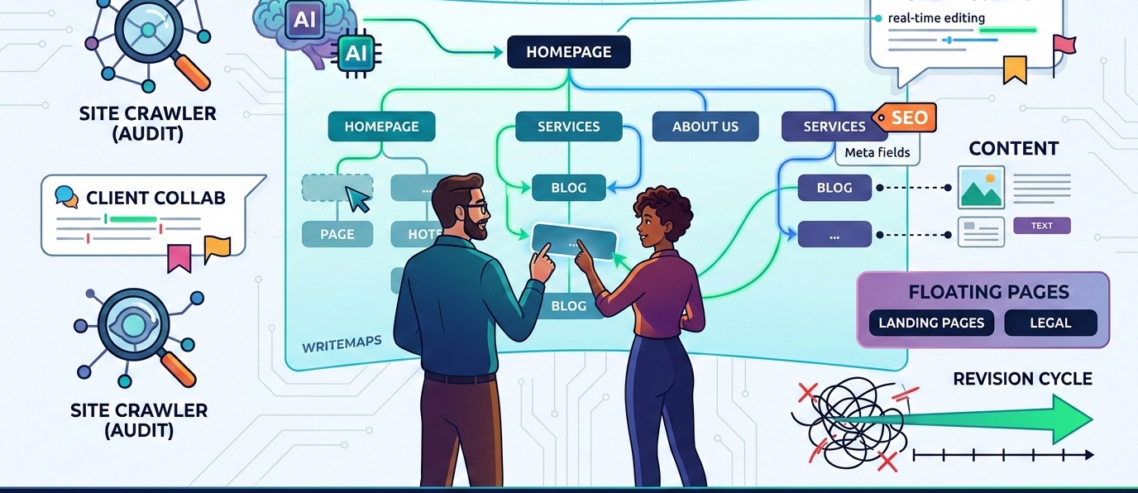
The Hidden Cost of Bad Website Planning for Agencies
For digital and creative agencies, the early stages of a web project are often deceptively simple. A discovery call is made, high-level concepts are discussed, and the project officially kicks off. But without a standardized, reliable approach to website planning for agencies, subtle inefficiencies rapidly begin to compounding. These inefficiencies, though seemingly small at first, …
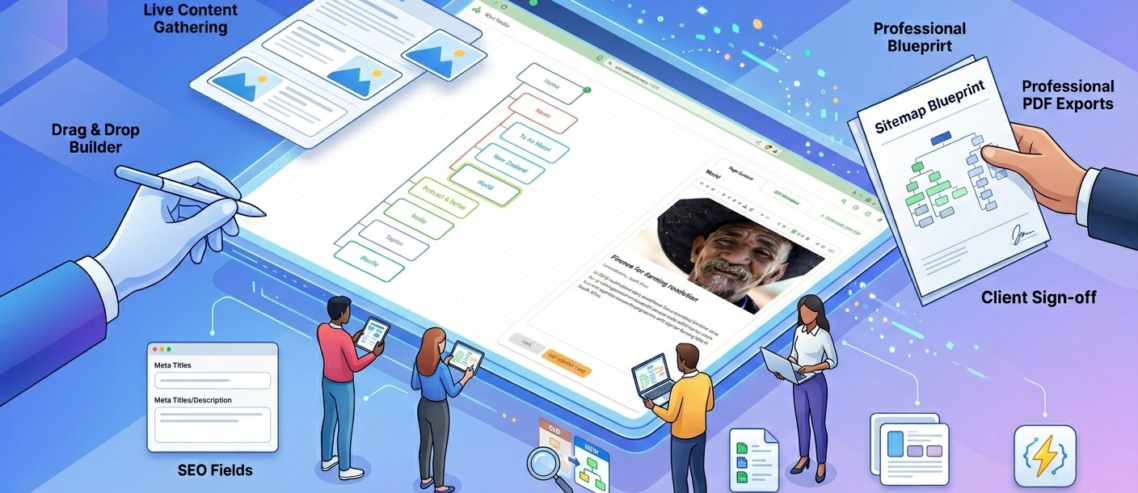
Why “Client-Ready Sitemaps” Are the Missing UX Deliverable
How digital agencies use professional information architecture to secure sign-off and scale project delivery. In the traditional web development lifecycle, sitemaps have often been treated as internal “scaffolding” rather than a formal client-facing asset. Many freelancers and junior agencies rely on messy whiteboard sketches or generic spreadsheet lists to communicate site structure. however, as an …

How Top Agencies Onboard Web Design Clients Without Chasing Content
The definitive guide to scalable IA, professional UX deliverables, and streamlined client onboarding for modern digital agencies. For most digital and creative agencies, the transition from a signed proposal to a live website is often stalled by a single, notorious bottleneck: content collection. Traditional workflows involve fragmented spreadsheets, buried email attachments, and “placeholder” text that …