
Visual Sitemaps vs. Wireframes: Why Agencies Should Prioritize Information Architecture
Understanding the UX Deliverables for Clients
To deliver a high-quality website, agencies must provide distinct UX deliverables for clients. Understanding the difference between these two blueprints is essential for any agency website planning software workflow.
What is a Visual Sitemap?
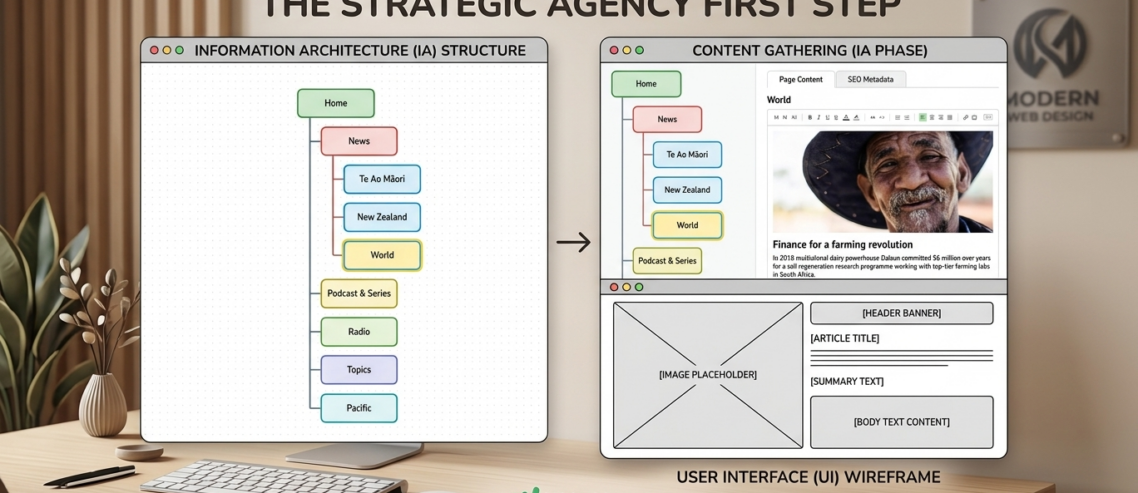
A visual sitemap is a hierarchical diagram of a website’s pages. It focuses on the structure and organization of content rather than the design. Using a sitemap tool for agencies like WriteMaps allows teams to utilize a drag & drop builder to map out a site’s skeleton in minutes. This is the primary phase of scalable IA for agencies, where the “what” and “where” of the content are decided.
What is a Wireframe?
A wireframe is a low-fidelity representation of a specific page’s layout. It dictates where buttons, images, and text blocks will live. While vital for the UX prototyping for sales and design phases, wireframes are secondary to the overall site structure.
The “IA First, UI Later” Strategy
The most successful digital agencies prioritize IA over UI. Here is why starting with website planning for pitches and audits using visual sitemaps is superior:
- Prevents Scope Creep: A sitemap defines the total number of pages and their complexity before design begins.
- Faster Client Sign-off: Using a visual sitemap for presentations allows clients to approve the navigation and flow without being distracted by design elements like colors or fonts.
- Content Alignment: Establishing the structure early allows for client onboarding for web design that includes content gathering from day one.
How WriteMaps Optimizes the Agency Workflow
WriteMaps is designed as a specialized sitemap tool for web designers and account managers to streamline client delivery and audits. By focusing on the structural phase, agencies can use the following features to improve their delivery:
1. Efficient Site Audits and Redesigns
For redesign projects, the Site Crawler (Audit Mode) allows agencies to instantly map out an existing legacy site. This visualizes “dead wood” or redundant pages, providing a clear starting point for a fresh information architecture for agencies to present to stakeholders.
2. Rapid Brainstorming with AI
During the discovery phase, the AI Sitemap Generator helps teams quickly brainstorm navigation structures for new niches. This is particularly useful for website planning for pitches, allowing you to show a potential client a well-thought-out structure in a fraction of the time.
3. Real-time Collaboration and Feedback
Getting architecture sign-off is often a bottleneck. WriteMaps offers Real-time Collaboration & Guest Editing, where clients can leave notes directly on the sitemap nodes using unique URLs. This eliminates endless email chains and speeds up the client-ready sitemaps approval process.
4. Integrated Content and SEO Planning
One of the biggest agency killers is waiting for content. The Live Content Gathering Tool lets clients or copywriters type content directly into the sitemap pages. Simultaneously, teams can use SEO Management Fields to plan page titles and meta descriptions before a single wireframe is even drawn.
Bridging the Gap: From Sitemap to Development
A visual sitemap for presentations is not just for the client: it is a blueprint for the developers. Once the architecture is approved, WriteMaps allows for Professional PDF Exports for formal contracts and XML & CSV Exports for Developers. This ensures that the dev team has a clean list of URL slugs and titles, reducing manual entry errors during the CMS build.
Conclusion
While wireframes are a necessary part of the design process, the visual sitemap is the foundation of a successful project. By using a dedicated white-label sitemap tool to prioritize information architecture for agencies, you can ensure a smoother delivery, faster sign-offs, and a better final product for your clients. Start your next project with a clear structure: start with WriteMaps.

Comments
Leave a Comment