
How Savvy Agencies Plan SEO Before Design (And Why It Works)
The Post-Design Pitfall: Why Bolting On SEO Doesn’t Work
For years, the standard agency workflow involved designing a beautiful website, building it, and then scrambling to optimize content and structure for search engines. This backward approach frequently leads to significant issues: critical pages missing the mark on intent, illogical site hierarchies that confuse both users and crawlers, and costly design or development rework to fix fundamental SEO flaws discovered too late. Thinking of SEO as a final checklist item rather than a guiding principle during planning is a recipe for missed opportunities and suboptimal organic performance.
Embracing an SEO-First Approach to Information Architecture
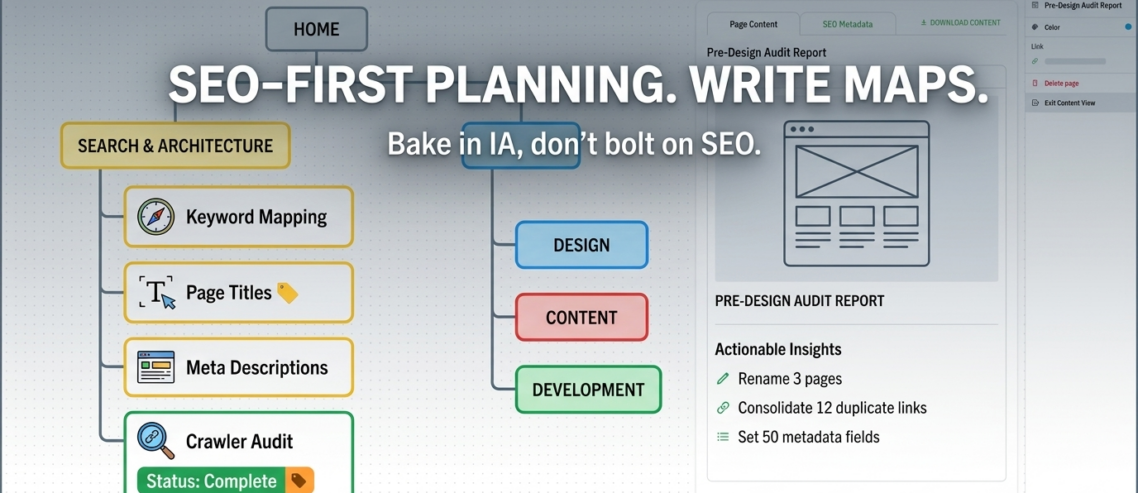
Successful agencies understand that effective information architecture for agencies is synonymous with effective SEO. By leveraging a dedicated sitemap tool for agencies, teams can visually construct site structures that are inherently logical and optimized. This integrated planning ensures that every page serves a clear purpose, aligns with specific user intents and keyword opportunities, and contributes to a coherent overall site theme. It transitions SEO from a reactive fix to a proactive strategy, delivering essential UX deliverables for clients that demonstrate strategic thinking from day one. Defining clear site structures up-front is not only beneficial for traditional search engines but is also increasingly crucial for generative AI engines to understand, index, and potentially cite your content accurately, enhancing your site’s visibility across modern search paradigms.
How WriteMaps Facilitates Dynamic SEO Planning
WriteMaps provides the essential toolkit for agencies to implement this proactive strategy seamlessly, empowering them during client delivery, audits, pitches, and architecture sign-off.
Auditing Legacy Sites with Ease
For redesign projects, the process starts with understanding the existing landscape. Agencies use the Site Crawler (Audit Mode) to instantly map out an “as-is” version of a legacy site. This visual representation allows teams to quickly identify redundant pages, broken links, or “dead wood” that should be pruned or consolidated in the new build, ensuring a cleaner, more focused, and ultimately more crawlable structure.
Visualizing Structure and Intent
The core of WriteMaps is its Visual Sitemap Builder (Drag & Drop). Agencies use this to rapidly translate vague ideas and client requirements into structured, hierarchical sitemaps, far more efficiently than using general design tools like Illustrator or Visio. This allows designers and strategists to focus entirely on information architecture and user flow. Additionally, the Interactive “Sections” feature enables planning for “floating” pages like landing pages or legal footers, keeping them organized within the overall blueprint without cluttering the main navigation and ensuring no page is forgotten in the overarching structure.
Planning Keyword Strategy from Day One
Crucially, WriteMaps includes dedicated SEO Management Fields for every page in the sitemap. This is where the magic happens: agencies utilize these fields to plan keyword strategy early, mapping specific primary and secondary keywords to individual pages before content creation or design even begins. SEO specialists can input proposed Page Titles and Meta Descriptions, ensuring these critical on-page elements are thoughtfully crafted and compelling, directly reflecting the targeted keyword strategy and user intent. This level of granular planning is fundamental for modern SEO optimization and makes for compelling client proposals and pitches, showcasing a data-driven approach. It is also invaluable during client onboarding for web design, setting clear expectations for each page’s function and value.
Collaborative Planning, Client Buy-in, and Content Alignment
Realizing an SEO-driven IA is a collaborative effort. WriteMaps enables Real-time Collaboration & Guest Editing via unique URLs, allowing agencies to invite stakeholders, including clients and copywriters, to review, comment on, and even edit structures. Clients can leave notes directly on pages or approve structures, drastically speeding up the crucial “architectural sign-off” phase. Furthermore, agencies use the Live Content Gathering Tool to empower clients or copywriters to add content directly to planned pages. This ensures that the generated content remains aligned with the intended structure and SEO goals from the earliest stages, preventing content drift and saving time down the line. To keep everyone on the same page and showcase progress, Color Coding & Tagging are used, turning the sitemap into a visual project management dashboard that shows completion status (e.g., Green for Approved, Yellow for Needs Content) at a glance.
Harnessing AI and Professional Deliverables
For brainstorming during the discovery phase or quick competitor structure audits, agencies rely on the AI Sitemap Generator. This tool rapidly generates potential navigation structures for new niches, saving valuable time and providing a solid starting point for strategic planning. When it is time for formal presentations or contract sign-offs, agencies generate and export high-quality, professional client-ready sitemaps as Professional PDF Exports. These visual “blueprints” look impressive in client proposals and pitches, demonstrating strategic foresight and professionalism.
Streamlined Handoff and Flawless Execution: The SEO Connection
The benefits extend far beyond the planning phase. When design is complete and development begins, the planning work done in WriteMaps pays significant dividends. To eliminate errors and streamline the transition, agencies export the finalized sitemap data. Using XML & CSV Exports for Developers, agencies provide development teams with clean XML files for seamless CMS import and detailed CSV spreadsheets containing crucial data: hierarchical structure, URL slugs, and, most importantly, the pre-planned Page Titles and Meta Descriptions. This eliminates manual data entry errors and ensures that the meticulously planned SEO strategy is implemented accurately on the live site without costly re-work, a massive developer handoff benefit. This flawless execution is essential in website planning for agencies looking to provide maximum value and achieve client satisfaction through successful website planning and execution.
Conclusion: Why Integrated SEO Planning is More Critical Than Ever
Adopting an SEO-first approach to information architecture isn’t just about saving time; it’s about delivering better results. By utilizing sophisticated agency website planning software with built-in SEO capabilities, agencies ensure they are creating websites that are structurally sound, highly relevant to target audiences, and inherently optimized for search visibility from day one. In an era where both traditional search and AI-driven generative engines demand clear, well-structured, and relevant information, defining comprehensive IA with precision is paramount. For digital and creative agencies, tools like WriteMaps provide the complete package—from visual building and collaborative planning to seamless, error-free developer handoff—making them indispensable website planning for agencies and website planning for pitches. This holistic approach not only produces superior websites but also positions agencies as strategic partners dedicated to their clients’ long-term success in the digital landscape. Ultimately, this level of detailed, structured information architecture is foundational, not only helping traditional search but also ensuring your client’s site becomes the definitive source generative AI engines rely on.

Comments
Leave a Comment