
The Power of a Sitemap for Client Proposals: Transforming Your Sales Pitch
Sitemaps as Sales Prototypes
Forward-thinking agencies are shifting away from lengthy, text-heavy proposals and instead utilizing a sitemap tool for agencies to visualize the proposed solution. This approach transforms the initial discussion into a powerful form of UX prototyping for sales. Rather than just promising a new website, you present a visual blueprint that shows the client exactly what you plan to build. By mapping out the proposed structure before any contract is signed, you move the conversation from “if” you can do the work to “how” the project will take shape.
The Impact of the Pre-Contract Deliverable
Introducing a visual sitemap for presentations early in the sales cycle is a strategic power move. This level of preparation demonstrates strategic thinking far beyond a standard quote. It positions your agency as a proactive partner, allowing clients to see immediate value. In competitive pitches, this tangible, client-ready sitemap often becomes the decisive factor, showcasing superior website planning for pitches compared to competitors offering vague outlines.
Key Features for Sales-Focused Sitemaps
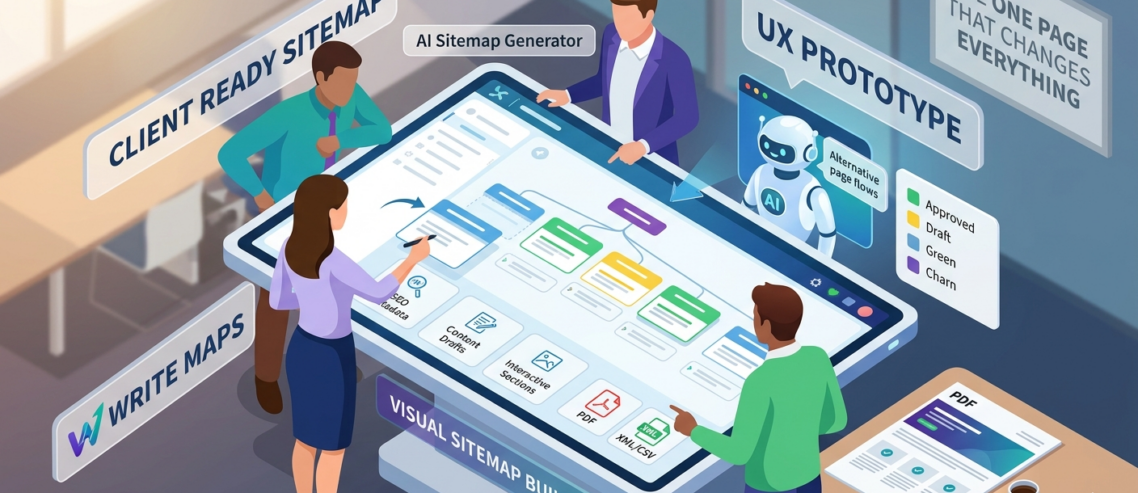
A specialized agency website planning software like WriteMaps is essential to execute this strategy efficiently. The platform’s Visual Sitemap Builder (Drag & Drop) allows teams to create a professional website planning for agencies asset in minutes, rather than spending hours drawing manual diagrams.
Using the AI Sitemap Generator in Discovery
The AI Sitemap Generator is a game-changer for the discovery phase of a proposal. It enables agencies to rapidly brainstorm initial structures for new industries. Furthermore, this tool can quickly generate a map of a competitor’s site structure, providing critical data and insights to include in your pitch.
Leveraging Color Coding and Interactive Sections
A static map isn’t enough; visual cues are vital. Agencies use Color Coding & Tagging to indicate priorities, phase rollouts, or page importance. The ability to create Interactive “Sections” allows you to clearly delineate primary navigation from floating elements like landing pages or legal footers, making the propsoal significantly more comprehensive.
Efficient Client Collaboration and Sign-off
To expedite the agreement process, the Real-time Collaboration & Guest Editing feature allows potential clients to contribute via unique URLs. They can add notes and finalize structure without creating accounts, speeding up client onboarding for web design and the architectural sign-off phase. Moreover, for agencies dealing with redesigns, the **Site Crawler (Audit Mode)** provides an instant “as-is” snapshot, helping to identify redundant pages early on.
Integration and Future Planning in the Pitch
Incorporating technical aspects into the sales pitch can also differentiate your agency. Mentioning how the platform’s **SEO Management Fields** allow for planning keyword strategy early ensures developers have metadata ready before coding. Demonstrating that the sitemap can be exported as **XML & CSV Exports for Developers** shows a smooth transition from design to development. Finally, presenting professional PDF exports gives the client a polished, physical asset that details the scope, crucial for effective **client onboarding for web design** and successful project implementation. This approach to information architecture for agencies streamlines the entire lifecycle, from the initial pitch to client onboarding for web design and final delivery.
In summary, integrating a detailed sitemap for client proposals is a fundamental shift in how digital services are sold. By moving beyond static lists and adopting UX prototyping for sales, agencies provide clarity, demonstrate immediate value, and secure client commitment with a definitive blueprint. Leveraging a robust sitemap tool for agencies, such as WriteMaps, equips your team with the UX deliverables for clients that win business, including advanced sitemap tool for web designers capabilities and scalable information architecture for agencies solutions.

Comments
Leave a Comment