
Why “Client-Ready Sitemaps” Are the Missing UX Deliverable
To move from a vendor to a strategic partner, digital and creative agencies are now prioritizing client-ready sitemaps as a core UX deliverable for clients. A professional sitemap serves as the definitive blueprint for the entire project, bridging the gap between a sales pitch and the final build.
The Shift from Internal Artifact to Professional Blueprint
A visual sitemap for presentations does more than list pages; it defines the user journey. When agencies use a dedicated sitemap tool for web designers like WriteMaps, they transform a technical necessity into a high-value consultation asset. This shift is critical for website planning for pitches and UX prototyping for sales, where clarity often wins the contract.
1. Professionalism via Presentation-Grade Exports
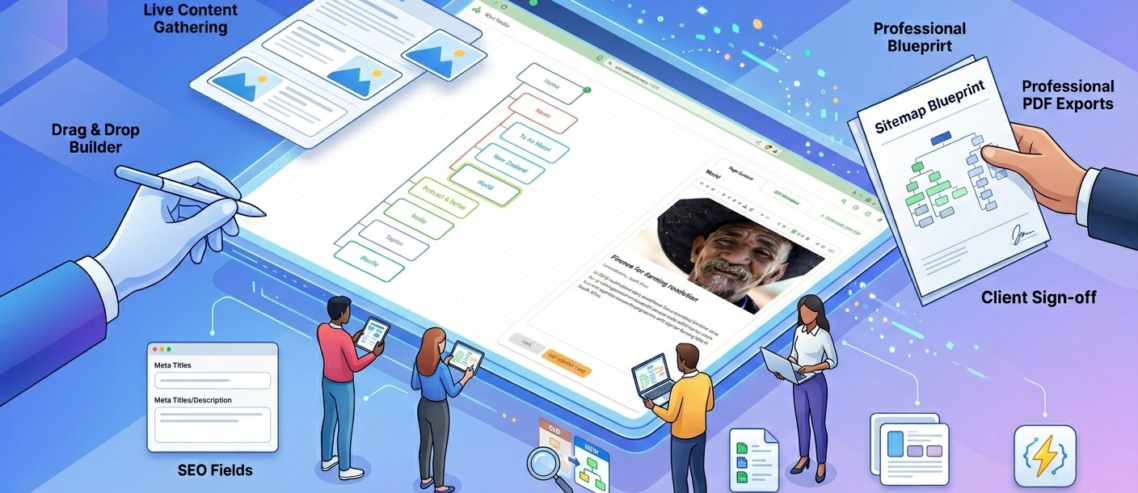
Handing a client a spreadsheet is functional, but presenting professional PDF exports is influential. These exports provide a tangible “architectural sign-off” document that can be attached to contracts, ensuring both the agency and the client are aligned on the total page count and site depth from day one.
2. Visual Project Management with Color Coding
Using color coding and tagging within a sitemap allows agencies to communicate status at a glance. By marking pages as “Approved,” “In Progress,” or “Needs Content,” the sitemap becomes a living dashboard. This level of transparency is essential for client onboarding for web design, as it gives the stakeholder a clear view of the project’s health without technical jargon.
Solving the “Content Bottleneck” Early
The number one “agency killer” is waiting for client content. A sitemap tool for agencies should do more than draw boxes; it should facilitate data collection. With a live content gathering tool, clients can click directly into the sitemap structure to upload text, images, or files. This ensures that information architecture for agencies is not just a structural map, but a content repository that evolves with the project.
Bridging the Gap Between Design and Development
A scalable IA for agencies requires a seamless handoff to the technical team. By utilizing XML and CSV exports for developers, agencies eliminate manual data entry errors. Developers receive a clean list of URL slugs and page titles, ensuring the CMS build matches the approved design perfectly.
Strategic SEO Integration
Modern website planning for agencies must include search strategy. By using dedicated SEO management fields for Page Titles and Meta Descriptions within the sitemap, agencies can plan keyword placement during the architecture phase rather than treating SEO as an afterthought during the build.
Key Features of a High-Performance Sitemap Tool
When selecting agency website planning software, look for these essential capabilities that support a white-label sitemap tool workflow:
| Feature | Agency Benefit |
|---|---|
| Visual Sitemap Builder | Drag and drop interface for rapid hierarchy adjustments during live workshops. |
| Site Crawler (Audit Mode) | Instantly map “as-is” structures for redesign audits and competitive analysis. |
| AI Sitemap Generator | Rapidly brainstorm navigation structures for new niches or sales discovery. |
| Interactive Sections | Manage “floating” pages like landing pages or footers outside the main nav. |
| Real-time Collaboration | Invite stakeholders via unique URLs for “guest editing” without account friction. |
Conclusion: Establishing the Gold Standard in UX Deliverables
For agencies looking to scale, sitemap for client proposals and audits are no longer optional. By moving away from static documents and adopting a dynamic sitemap tool for agencies, you provide a level of clarity that protects your profit margins and delights your clients. WriteMaps provides the framework for this professional evolution, ensuring your “client-ready sitemaps” are the most valuable document in the room.

Comments
Leave a Comment